


































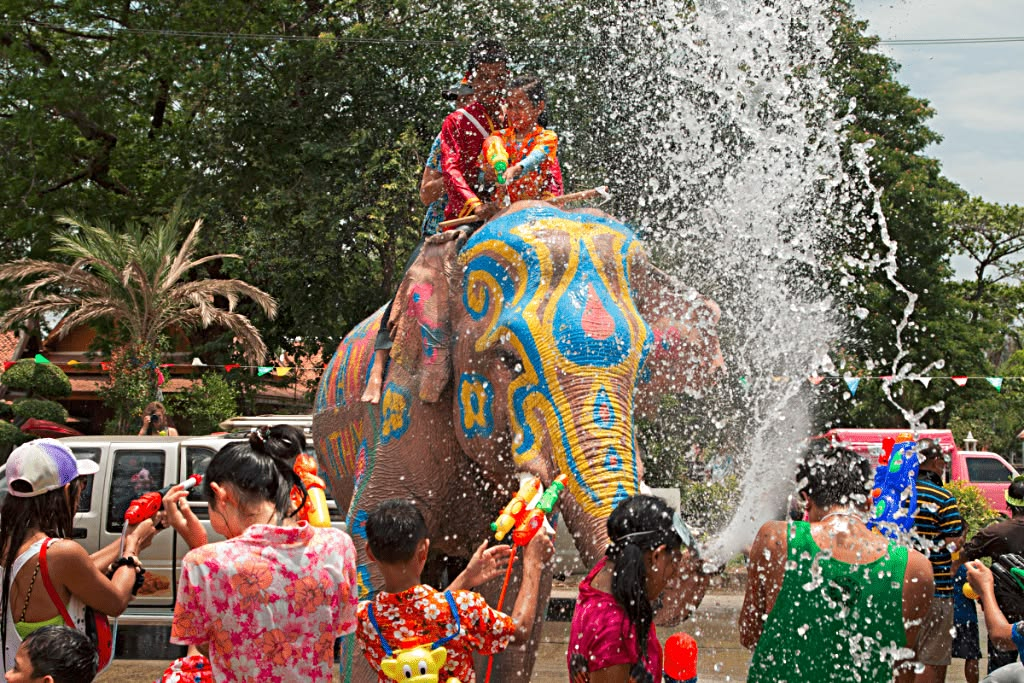
The traditional New Year festivals celebrated across mainland Southeast Asia mark the transition into the solar calendar year as the sun enters the constellation of Aries. Falling annually in mid-April (traditionally April 13–15, with many regions celebrating for up to a full week), these festivals transform the region into a massive, vibrant celebration of renewal, spiritual cleansing, and community unity.
While globally celebrated for large-scale, nationwide water fights, the water rituals are deeply rooted in ancient Buddhist and agrarian traditions representing purification, the washing away of past misfortunes, and blessings for abundance in the year ahead.
Regional Names & Cultural Expressions
The festival is celebrated concurrently across multiple Southeast Asian nations, each infusing the holiday with distinct regional heritage:
| Country / Region | Festival Name | Key Cultural Highlights |
| Thailand | Songkran | Nationwide water fights, morning merit-making at temples (Song Nam Phra), and modern mega EDM water music festivals. |
| Laos | Bunpimay (Pi Mai) | Processions of the sacred Prabang Buddha image in Luang Prabang, traditional Baci wrist-tying ceremonies, and building sand stupas along the Mekong. |
| Cambodia | Chol Chnam Thmey | Three days of distinct rituals (Moha Songkran, Veareak Vanabat, Veareak Laeung Sak), traditional folk games, and temple offerings. |
| Myanmar | Thingyan | Multi-day celebration featuring Thingyan dance troupes, sprinkling water with sprigs of Eugenia leaves (thabyay), and open stages (pandals). |
Traditional Customs & Cultural Rituals
Behind the high-energy street festivities lie revered familial and spiritual customs:
- Temple Merit-Making (Song Nam Phra): Devotees visit local wats (temples) early in the morning to offer food to monks and gently pour scented water over Buddha statues to bring good fortune.
- Rod Nam Dam Hua (Honoring Elders): Younger family members pour scented water containing jasmine and dried flowers over the hands and feet of parents and elders, asking for forgiveness and receiving blessings for the upcoming year.
- Sand Stupas (Phra Sai): Families carry sand to temple grounds to construct miniature pagodas decorated with colorful flags and incense, symbolizing the restoration of soil carried away on shoes throughout the year.
Epicenters for the Modern Celebration
- Bangkok, Thailand: Epicenters like Silom Road and Khaosan Road become wall-to-wall pedestrian splash zones. Simultaneously, high-production EDM festivals such as S2O Songkran and Siam Songkran feature world-class DJs, pyrotechnics, and integrated high-pressure water cannons.
- Chiang Mai, Thailand: The historical Old City moat provides an endless water source for the country’s most intense, continuous perimeter water battle, mixed with classical Lanna cultural parades.
- Luang Prabang, Laos: The UNESCO World Heritage town hosts vibrant costume processions, the Miss New Year (Nang Sangkhan) parade, and traditional flower-water splashing along temple corridors.
Essential Gear & Survival Tips for Travelers
- Waterproof Everything: Invest in high-grade waterproof phone pouches, dry bags for valuables, and protective eye goggles to shield against high-pressure water streams and natural chalk (din sor pong).
- Respectful Splashing Etiquette: Never splash monks, elderly individuals, pregnant women, moving vehicles/motorbikes, or people carrying delicate camera gear. Traditional, gentle pouring is reserved for elders and temple settings.
- Sun & Skin Protection: April is the hottest month of the year in Southeast Asia, with daytime temperatures frequently exceeding 38°C (100°F). Wear quick-drying, breathable UV clothing, reef-safe waterproof sunscreen, and secure footwear.