

















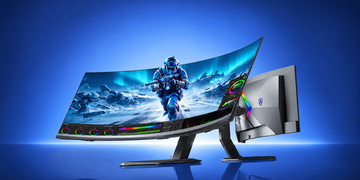


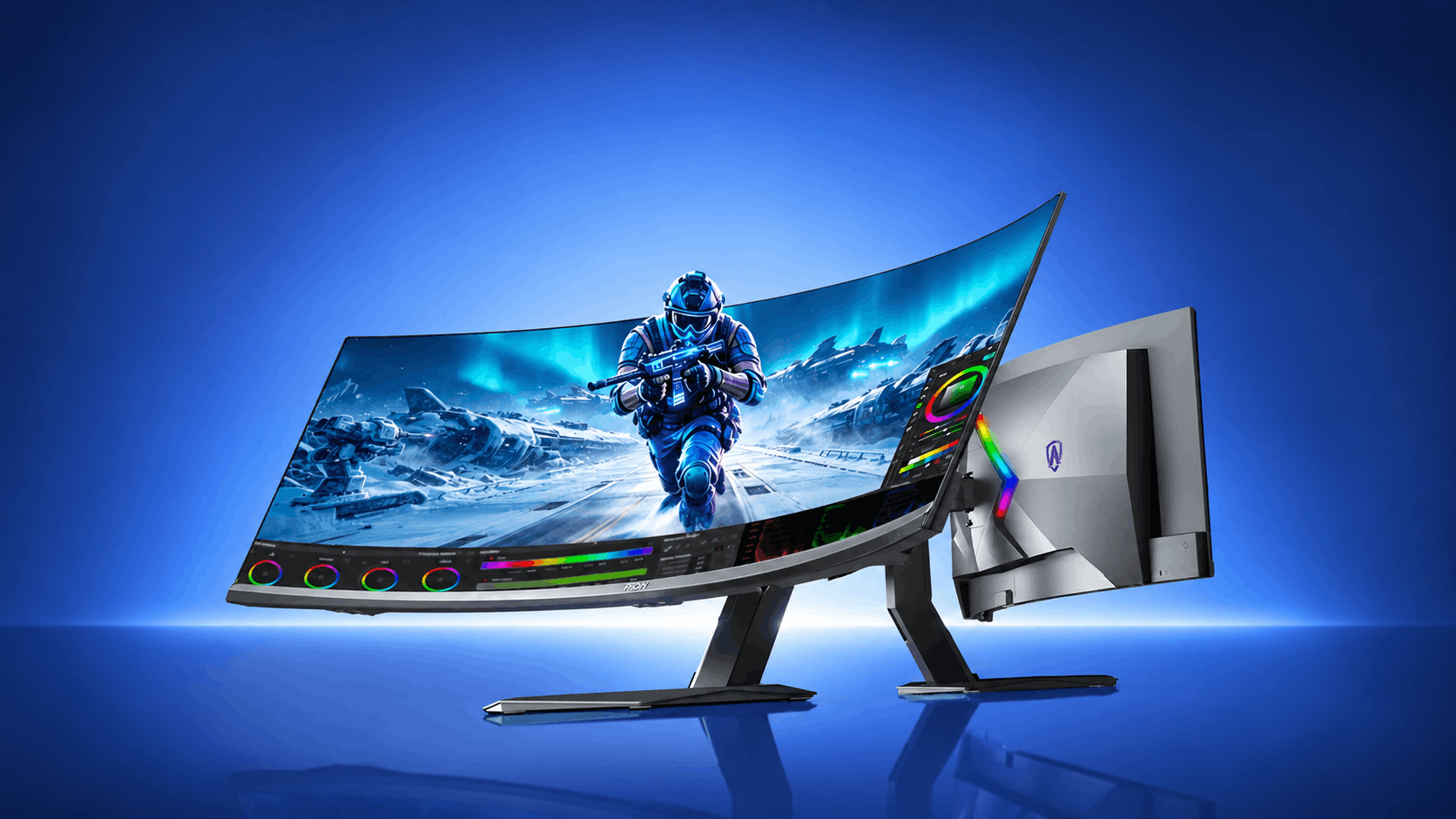
The premium gaming monitor and professional workstation sectors are witnessing a major architecture shift. Flagship display lineups from Samsung Odyssey, LG UltraGear, ASUS ROG, and Dell Alienware are advancing beyond single-layer emissive panels by integrating Tandem OLED architectures (stacked dual-electroluminescent layers) paired with Quantum Dot color converters.
Engineered into panoramic 32:9 aspect ratios with aggressive 1000R curvature, these 49-inch (Dual QHD) and 57-inch (Dual UHD) panels eliminate the historic trade-offs of OLED technology—overcoming ambient daylight washout, extending panel lifespan, and delivering zero-latency fluidity for professional sim racing cockpits and multi-track post-production timelines.
The Tandem Stack: Solving Peak Luminance and Burn-In Degradation
Standard single-layer OLEDs face a fundamental physical trade-off: driving individual organic subpixels at high current to achieve daylight-visible HDR significantly accelerates organic decay, increases heat buildup, and elevates static image burn-in risk.
[Top Substrate & Anti-Reflective Optical Coating]
                        │
                        ▼
[Quantum Dot (QD) Nanocrystal Color Layer (Pure RGB)]
                        │
                        ▼
[Primary Organic Emissive Layer (Tandem Stack 1)]
                        │
                        ▼
[Intermediate Charge Generation Layer (CGL)]
                        │
                        ▼
[Secondary Organic Emissive Layer (Tandem Stack 2)]
                        │
                        ▼
[Graphene / Custom Vapor-Chamber Heatsink Baseplate]
- Stacked Dual-Layer Light Generation: By stacking two organic emissive layers in series connected via an intermediate Charge Generation Layer (CGL), the panel produces equivalent light output with half the electrical drive current per layer.
- Daylight-Ready HDR & Sustained Brightness: Full-screen sustained white luminance climbs above 300–350 nits, while 2% to 10% peak HDR windows reach 1,300+ nits, allowing deep inky blacks and vivid highlights to cut cleanly through brightly lit studio environments.
- Long-Term Longevity & Heat Dissipation: Operating at lower current densities coupled with rear-mounted graphene heat-dissipation plates extends overall diode lifespan by up to 60%, effectively mitigating burn-in concerns associated with static UI elements (such as timeline playheads, speedometer HUDs, and NLE menu bars).
32:9 Super Ultrawide & 1000R Immersion: Technical Benchmarks
| Display Parameter | Traditional 16:9 / 21:9 OLED | 49–57″ Tandem QD-OLED (32:9) |
| Field of View (FOV) | Standard forward viewport; requires dual/triple bezel gaps. | Continuous, seamless panoramic field covering human peripheral vision without center bezels. |
| Curvature Radius | Flat or subtle 1800R curve. | 1000R deep curve; matches natural ocular focal distances across the entire screen width. |
| Refresh Rate & Motion | 120Hz – 175Hz (0.1ms response). | 240Hz native refresh with near-instantaneous 0.03ms GtG response times. |
| Interface Bandwidth | DisplayPort 1.4a / HDMI 2.1 (DSC required). | DisplayPort 2.1 (UHBR20) & HDMI 2.1 FRL; uncompressed Dual UHD @ 240Hz. |
Sim Racing & Cockpit Telemetry
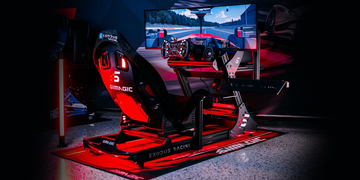
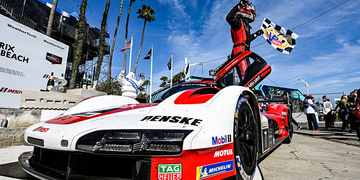
- Distortion-Free 1000R Geometry: The tight 1000R radius curves the display perimeter toward the driver’s peripheral vision. When configured inside simulators like iRacing, Assetto Corsa Competizione, or Automobilista 2, mathematical camera projection renders side-window apexes and side mirrors in 1:1 true spatial perspective without lateral stretching.
- Pixel-Level Motion Tracking: The 0.03ms gray-to-gray response time eliminates pixel overshoot and inverse ghosting during high-speed 300 km/h straightaway passes or sudden tire lockup smoke effects.
Post-Production & Studio Workflow Optimization
- Continuous Multi-Track Editing: A 32:9 panel replaces a cluttered dual-27″ or dual-32″ monitor setup with a single unbroken canvas. Video editors can span 100+ audio/video tracks across DaVinci Resolve or Premiere Pro timelines while retaining full-resolution 4K preview monitors and node color trees simultaneously without bezel separation.
- Color Volume & Dynamic Range: 99%+ DCI-P3 and wide Rec.2020 color gamut coverage driven by pure Quantum Dot wavelength tuning ensure color-accurate grading in both SDR and HDR mastering modes.