






































Sea Otter Classic 2026: The New Frontier of Dirt, Power, and Backcountry Engineering
Set against the rugged, sun-drenched hills of WeatherTech Raceway Laguna Seca in Monterey, California, the Sea Otter Classic has firmly cemented its position as the world’s premier outdoor cycling festival and technology proving ground. What began decades ago as a grassroots cross-country race has evolved into the central summit where frame engineers, component designers, apparel innovators, and adventure-tech startups unveil the future of off-road exploration.
The 2026 edition made one thing abundantly clear: the outdoor industry has moved beyond incremental cosmetic upgrades. Manufacturers are tackling complex material sciences, miniaturized off-grid electronics, bio-composite chassis manufacturing, and intelligent pedal-assist systems that redefine human performance on the trail.
The “Stealth” E-Bike Revolution: Natural Kinetics Over Raw Power
The era of massive downtubes, noisy hub motors, and awkwardly heavy battery packs is officially over. The standout category at Sea Otter 2026 was the lightweight, sub-15 kg E-MTB and gravel category, engineered to provide intuitive pedal assist that mimics natural biomechanics rather than overriding them.
[Bilateral Crank Torque Sensors (1000Hz)]
                    │
                    ▼
[Micro-Processor / Predictive Terrain AI Engine]
                    │
                    ▼
[Harmonic Pin-Ring / Planetary Mid-Drive Motor (40–60 Nm)]
                    │
                    ▼
[Seamless Power Delivery with Zero Freewheel Drag at >25 km/h]
- Harmonic Pin-Ring & Compact Mid-Drive Units: Miniaturized central motor units now fit completely within standard bottom-bracket profiles. They deliver 40 to 60 Nm of torque while adding less than 1.4 kg to the total frame weight.
- Instant Decoupling Mechanisms: Advanced internal sprag clutches fully disengage motor resistance once the bike exceeds statutory motor cutoffs (25 km/h or 32 km/h). Riders experience zero parasitic drag when sprinting flats or pumping downhill rollers.
- Predictive Adaptive Algorithms: Using high-frequency cadence, gradient, and bilateral crank-strain sensors, internal motor control units automatically increase torque output before a rider loses forward momentum on technical rock-gardens, completely eliminating awkward power surges.
Material Science: Thermoplastic Composites & Circular Carbon
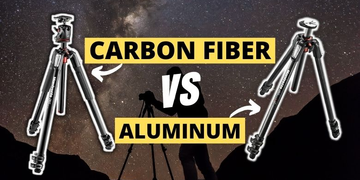
Traditional carbon fiber reliance on non-recyclable epoxy resin systems is facing structural obsolescence. Sustainable performance materials took center stage, blending high-impact resistance with low-carbon footprints.
- Thermoplastic Matrix Carbon (TPC): Unlike brittle thermoset resins, continuous-fiber thermoplastic matrices absorb massive impacts without catastrophic delamination. If a sharp granite rock strikes the down-tube, the thermoplastic structure deforms microscopically to dissipate kinetic energy rather than fracturing.
- Closed-Loop Circularity: At the end of a frame or wheelset lifecycle, thermoplastic carbon components can be shredded, remelted, and thermoformed into high-load components like derailleur linkages, chain guides, or tire levers.
- Bio-Resins & Flax Hybrid Weaves: Niche frame builders showcased hybrid carbon-flax layering. Natural flax fibers integrated into seat stays and fork blades deliver superior high-frequency vibration damping on harsh gravel tracks compared to pure carbon constructs.
Ultralight Backcountry Shelters & Technical Fabrics
Bikepacking and ultralight trekking setups witnessed a major overhaul in durability, pack-volume efficiency, and weather resistance.
| Gear Category | Legacy Standard | 2026 Field Benchmark | Real-World Advantage |
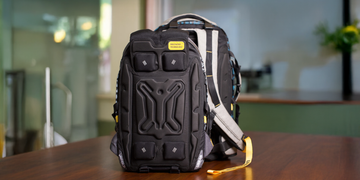
| Bikepacking Luggage | Heavy PU-coated ballistic nylon with stitched seams | Monolithic seam-welded Bio-Dyneema & UHMWPE | 45% weight reduction, complete puncture resistance, 100% submersible waterproofing |
| Backcountry Shelters | Fragile micro-ripstop nylon needing seam sealant | Pre-shaped carbon-strut single-wall shelters using hydro-repellent membranes | Sub-600g total shelter weight with internal condensation-free breathability |
| Apparel & Weather Defense | Bulky PTFE-based 3-layer rain shells | PFAS-free electrospun nanofiber membranes | Permanent water repellency without toxic chemical DWR coatings; stretchable and noiseless |
Standalone Off-Grid Communication & Micro-Telemetry
Safety systems in extreme remote environments have migrated from bulky handheld GPS bricks directly into standard riding equipment.
- Integrated Direct-to-Cell Satellite Transceivers: Tiny chipsets embedded into bar-mounted computer displays and rugged smartwatches now link directly with Low Earth Orbit (LEO) satellite constellations. Athletes can broadcast emergency distress beacons, receive severe weather warnings, and transmit coordinates without carrying auxiliary satellite messengers.
- Real-Time Tire Pressure & Suspension Telemetry: Valve-integrated pressure monitors and fork/shock velocity sensors feed live hydraulic damping data to handlebar screens, letting riders adjust suspension air pressure and rebound settings on the fly.
The Broader Market Impact
Sea Otter Classic 2026 proved that adventure hardware is becoming tougher, smarter, and significantly more integrated. By discarding unnecessary weight and embracing high-durability composites alongside embedded edge-intelligence, modern outdoor gear allows athletes, gravel racers, and backcountry explorers to push deeper into remote terrain with unmatched reliability and control.