













Solo content creators, documentary filmmakers, and commercial videographers are experiencing a major workflow evolution. Leading manufacturers—including Sony, Canon, DJI, and Blackmagic Design—are bridging the divide between high-end cinema production and solo-operator agility by democratizing global shutter image sensors and embedding onboard Neural Processing Units (NPUs) into motorized stabilization hardware.
Compact Global Shutter Sensors: Eliminating Rolling Motion Artifacts
Global shutter architecture captures every pixel across the entire sensor plane simultaneously, fundamentally altering high-speed handheld and automotive cinematography.
[Simultaneous Full-Sensor Readout (Global Shutter)]
                          │
                          ▼
[Zero Motion Skew / Instant High-Speed Flash Sync]
                          │
                          ▼
[High-Throughput Image Processor (Dual Native ISO + Wide Log Curves)]
                          │
                          ▼
[Internal 10-Bit/12-Bit All-Intra & RAW Codec Ingest]
- Elimination of “Jello” & Spatial Warping: Rapid camera pans, helicopter blade rotations, and high-speed sports motion retain absolute geometric integrity, removing the angular distortion inherent to progressive rolling shutter readouts.
- Flash & Strobe Synchronization: Cameras can synchronize with strobes, stage lighting, and muzzle flashes at virtually any shutter speed without generating half-frame exposure banding.
- Preserving Dynamic Range Curves: Next-generation global shutter architectures utilize advanced pixel-level noise reduction and dual-gain stages to achieve 15+ stops of dynamic range, closing the historic low-light performance gap with rolling shutter sensors.
Standalone AI-Powered Tracking Gimbals: Phone-Free Autonomy
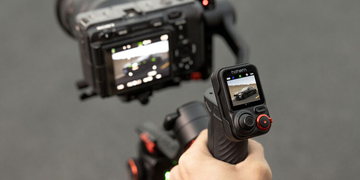
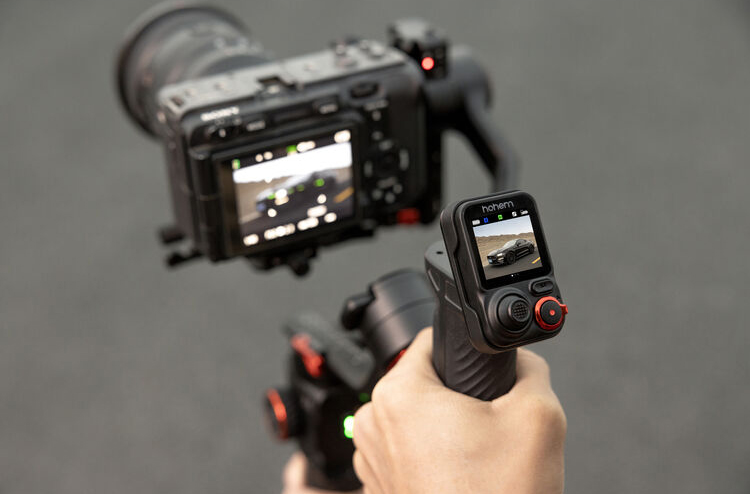
Camera stabilization has transformed from passive mechanical counterbalancing into intelligent, computer-vision-driven camera operation.
| Feature / Architecture | Legacy App-Tethered Gimbals | Next-Gen Standalone AI Gimbals |
| Tracking Pipeline | Requires smartphone app mirroring and Bluetooth/Wi-Fi bridging. | On-axis, built-in LiDAR optical sensor paired with an internal Edge-AI NPU. |
| Latency & Framing | High latency (100–300ms); prone to wireless frame drops and disconnects. | Real-time processing (<10ms); smooth, predictive framing directly drives motor axes. |
| Subject Recognition | Basic bounding-box 2D contrast tracking; loses subject during occlusions. | 3D skeletal and pose recognition; seamlessly reacquires subjects after obstacles. |
| Control Interface | On-screen phone tapping and manual joystick adjustment. | Intuitive gesture controls, dedicated physical tracking rings, and multi-axis thumb controls. |
Advanced Focus Integration: LiDAR + Motor Synchronization
Modern stabilization units now integrate focus pulling directly into the gimbal's compute loop:
- High-Density LiDAR Focus Engines: Onboard LiDAR emitters project tens of thousands of ranging points up to 20+ meters, instantly transmitting distance calculations to external lens motors.
- Manual Lens Cine-Autofocus: Vintage primes and fully manual cinema lenses effectively gain precision autofocus capabilities, maintaining razor-sharp depth of field on moving subjects without an assistant camera operator (1st AC).
- Smart Face & Silhouette Locking: Algorithms prioritize human eyes, faces, and torso silhouettes, distinguishing the target subject from background bystanders even in low-contrast scenes.
Studio & Run-and-Gun Ergonomics
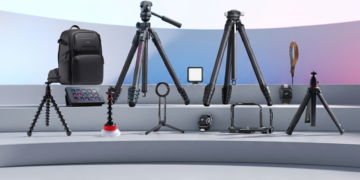
- Modular Quick-Release Systems: Tool-less balancing designs allow creators to transition cinema payloads from handheld rigs to gimbals or car-mount suction setups in seconds without recalibrating axis balance.
- Wireless Video & Protocol Expansion: Built-in wireless transmitters broadcast low-latency video feeds directly to field monitors while supporting remote camera parameter adjustments (ISO, shutter angle, aperture) directly from the stabilizer grips.