







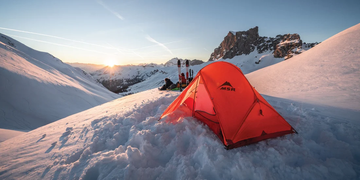
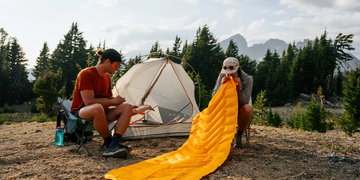







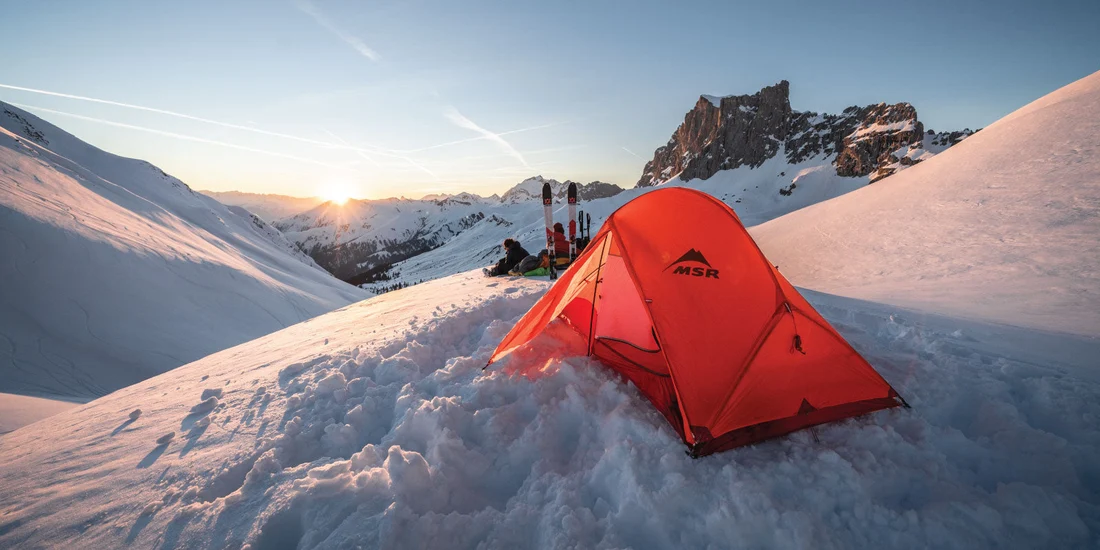
Choosing the right tent is one of the most important decisions for backpackers, mountaineers, and expedition travelers. A tent that performs beautifully on a calm summer weekend may become a serious liability when exposed to strong winds, heavy rain, snow, or freezing temperatures.
Two categories dominate the premium outdoor-tent market: ultralight three-season tents designed to minimize pack weight, and four-season expedition tents engineered to withstand severe alpine and winter conditions.
The difference is not simply about weight. Fabric construction, waterproofing, pole architecture, ventilation, snow loading, wind resistance, and overall structural design all play a role.
This guide compares the technologies behind modern ultralight and expedition tents, including ripstop nylon, Silnylon, Dyneema Composite Fabric (DCF), hydrostatic head ratings, DAC aluminum poles, Easton Syclone poles, and trekking-pole shelters.
Ultralight vs. 4-Season Tents: What's the Difference?
At a high level, ultralight tents prioritize low weight, compact packing, and efficient three-season protection, while four-season expedition tents prioritize structural strength and protection against extreme weather.
| Feature | Ultralight 3-Season Tent | 4-Season Expedition Tent |
|---|---|---|
| Primary goal | Minimum weight | Maximum protection |
| Typical use | Spring, summer, fall | Winter, alpine, expedition |
| Snow resistance | Limited to moderate | High |
| Wind resistance | Good | Excellent |
| Ventilation | Usually optimized | More limited |
| Fabric | Ripstop nylon, polyester, DCF | Heavy-duty nylon or specialized laminates |
| Pole system | Lightweight aluminum or trekking poles | Strong aluminum pole structures |
| Weight | Extremely low to moderate | Moderate to heavy |
| Packability | Excellent | Good |
| Best for | Backpacking and fast-and-light trips | Mountaineering and severe weather |
The key question is therefore not which tent is better, but which tent matches your environment and priorities.
1. Ripstop Nylon vs. Dyneema Composite Fabric
Tent fabric has a major influence on weight, waterproofing, durability, and packability.
Two materials frequently discussed in the ultralight market are ripstop nylon with silicone coating (Silnylon) and Dyneema Composite Fabric (DCF).
Ripstop Nylon
Ripstop nylon uses a woven construction with reinforced threads incorporated into the fabric. These reinforcement threads help prevent a small puncture or tear from rapidly propagating across the material.
When coated with silicone, the resulting material is commonly referred to as Silnylon.
Advantages of Silnylon
- Excellent strength-to-weight ratio
- Relatively affordable
- Highly packable
- Flexible in changing conditions
- Good tear resistance
- Widely available
- Suitable for many three-season shelters
One characteristic to remember is that nylon can absorb moisture and stretch when wet. This means a properly tensioned shelter may require additional adjustment during prolonged rain.
2. Dyneema Composite Fabric
Dyneema Composite Fabric, often abbreviated as DCF, takes a different approach.
Rather than relying primarily on a conventional woven structure, DCF uses extremely strong Dyneema fibers laminated between thin film layers.
This creates a material with an impressive strength-to-weight ratio.
Why Ultralight Backpackers Like DCF
DCF offers several important advantages:
- Very low weight
- Extremely high tensile strength
- Minimal water absorption
- Excellent waterproof performance
- Low stretch compared with nylon
- Strong resistance to many forms of tearing
- Stable dimensions in wet conditions
For fast-and-light backpacking, these characteristics can be extremely valuable.
However, DCF is not automatically the best material for every trip. It is generally more expensive, and its laminated construction behaves differently from woven nylon when exposed to abrasion, folding, and repeated mechanical stress.
For many backpackers, the decision comes down to weight savings versus cost and long-term durability requirements.
3. Understanding Hydrostatic Head Ratings
Waterproofness is another important specification when comparing tents.
One measurement frequently used is Hydrostatic Head (HH), expressed in millimeters.
A hydrostatic head test measures how much water pressure a fabric can withstand before water begins to penetrate it.
For example:
- 1,200 mm HH
- 2,000 mm HH
- 3,000 mm HH
- 5,000 mm HH
A higher number generally indicates greater resistance to water pressure.
However, hydrostatic head should never be treated as the only measure of a tent's weather protection.
A tent's real-world performance also depends on:
- Seam construction
- Seam sealing
- Fabric aging
- Ground pressure
- Wind-driven rain
- Construction quality
- Tent geometry
- Flysheet design
- Floor material
- Pitch tension
A well-designed tent with a moderate HH rating can perform extremely well, while a tent with a very high HH rating can still leak if its seams or construction are poorly executed.
4. Pole Architecture: DAC vs. Lightweight Trekking-Pole Designs
The tent's frame is just as important as its fabric.
Premium backpacking tents commonly use lightweight aluminum pole systems designed to balance strength and weight.
DAC Featherlite Pole Systems
DAC is widely recognized in the outdoor industry for lightweight aluminum tent poles.
The basic principle is simple: remove unnecessary material while maintaining sufficient structural strength.
A well-engineered pole system can provide:
- Low weight
- High strength
- Good flexibility
- Reliable connections
- Efficient packability
For three-season backpacking, this approach offers an excellent balance between structural stability and portability.
5. Trekking-Pole Tents: The Ultimate Weight Reduction?
Some ultralight shelters eliminate dedicated tent poles altogether.
Instead, they use trekking poles as the primary structural supports.
This can dramatically reduce the weight carried in a backpack because the user is already carrying trekking poles.
Benefits
- Extremely low packed weight
- Minimal pole hardware
- Compact packed size
- Excellent choice for fast-and-light backpacking
- Efficient use of existing equipment
Limitations
Trekking-pole shelters typically require more careful pitching than traditional freestanding tents.
They may also have limitations regarding:
- Interior structure
- Setup on uneven terrain
- Snow loading
- Strong crosswinds
- Freestanding convenience
For experienced ultralight backpackers, however, the weight savings can be significant.
6. MSR Hubba Hubba NX: A Versatile Backpacking Classic
The MSR Hubba Hubba NX represents the type of tent many backpackers choose when they want a reliable balance between weight, weather protection, interior space, and easy setup.
Its freestanding architecture makes it particularly practical for established campsites and rocky terrain where securing a trekking-pole shelter can be difficult.
The design philosophy is straightforward: provide a lightweight shelter without sacrificing too much livability.
Best suited for:
- Backpacking
- Three-season camping
- Multi-day hiking trips
- Campsites with variable terrain
- Travelers who prefer freestanding tents
The Hubba Hubba category is particularly attractive to users who value simplicity and versatility over absolute minimum weight.
7. MSR FreeLite Series: Lightweight Freestanding Performance
The MSR FreeLite series takes the lightweight backpacking concept further.
The design focuses on reducing unnecessary weight while maintaining the convenience of a structured shelter.
For hikers who want something lighter than a conventional freestanding backpacking tent without moving entirely into trekking-pole shelter territory, this category can be particularly appealing.
Its compact design makes it a strong option for:
- Long-distance backpacking
- Fast-and-light trips
- Solo or two-person adventures
- Weight-conscious travelers
8. Big Agnes Copper Spur HV UL: Space Meets Low Weight
The Big Agnes Copper Spur HV UL is another highly regarded example of a modern ultralight freestanding tent.
One of its defining characteristics is the effort to maximize usable interior volume without dramatically increasing packed weight.
This is important because ultralight tents sometimes sacrifice living space in the pursuit of lower pack weight.
The Copper Spur concept takes a different approach by using structural geometry to create more vertical and usable interior space.
Why Interior Geometry Matters
A tent's floor area does not tell the entire story.
Two tents with similar floor dimensions can feel completely different inside because of differences in:
- Peak height
- Wall angle
- Pole geometry
- Door configuration
- Vestibule size
- Headroom
For backpackers spending several hours inside a tent during bad weather, these differences can become surprisingly important.
9. Hilleberg Akto and Nammatj: Built for Serious Weather
At the other end of the spectrum are specialized four-season shelters from Hilleberg The Tentmaker.
Models such as the Akto and Nammatj represent a fundamentally different design philosophy from lightweight three-season tents.
Rather than optimizing exclusively for minimum pack weight, these shelters emphasize:
- Severe-weather protection
- Strong construction
- Wind resistance
- Snow performance
- Four-season usability
- Long-term reliability
This makes them particularly attractive to mountaineers, winter campers, and expedition users.
10. The Akto: Compact Four-Season Shelter
The Hilleberg Akto is known for combining relatively low weight with serious four-season capability.
It is designed for solo users who need more protection than a typical three-season ultralight shelter can provide.
Its compact architecture can be advantageous when conditions become severe because a smaller shelter generally presents less surface area to wind.
For solo winter backpacking, the Akto occupies an interesting middle ground between ultralight backpacking tents and much larger expedition shelters.
11. The Nammatj: A More Expedition-Oriented Approach
The Hilleberg Nammatj represents a more robust shelter philosophy.
Compared with minimalist ultralight tents, it emphasizes structural reliability and weather protection.
This type of design becomes particularly valuable when the tent may need to withstand:
- Strong winds
- Heavy snowfall
- Cold temperatures
- Extended storms
- Remote expedition conditions
When failure could mean more than simply an uncomfortable night, structural durability becomes a much higher priority.
12. Wind Resistance: Why Tent Shape Matters
Wind resistance is not determined by fabric strength alone.
The shape of a tent has a major influence on how forces are transferred through the structure.
Low-profile designs can reduce wind exposure, while properly tensioned guy lines distribute loads across the shelter.
A strong tent therefore depends on a complete system:
Fabric + poles + geometry + guy lines + stakes + pitching technique
A premium material cannot compensate for poor pitching.
Likewise, an excellent frame cannot fully protect a shelter that has been incorrectly oriented toward prevailing winds.
13. When Should You Choose an Ultralight Tent?
An ultralight three-season tent is generally the better choice when your priorities include:
- Reducing backpack weight
- Hiking long distances
- Fast-and-light travel
- Summer backpacking
- Mild shoulder-season conditions
- Compact packing
- Efficient campsite setup
For many hikers, reducing shelter weight by even 500–1,000 grams can make a noticeable difference over a long-distance route.
However, weight savings should always be considered against the weather conditions you realistically expect.
14. When Does a 4-Season Expedition Tent Make More Sense?
A four-season shelter becomes more attractive when you expect:
- Heavy snow
- High winds
- Winter storms
- Alpine environments
- Extended exposure
- Cold-weather camping
- Remote expedition conditions
In these environments, saving a few hundred grams may be less important than having a shelter that remains structurally sound when conditions deteriorate.
The wrong tent can turn an uncomfortable night into a genuine safety problem.
Ultralight vs. Expedition: The Bottom Line
There is no universal winner between ultralight and four-season expedition tents.
The best choice depends on the environment, trip duration, expected weather, and your tolerance for weight.
Choose ultralight when:
Weight is your highest priority.
Look for:
- Silnylon or DCF construction
- Efficient pole architecture
- Trekking-pole compatibility
- Compact vestibules
- High strength-to-weight ratios
Choose four-season when:
Weather protection and structural strength are your highest priorities.
Look for:
- Strong aluminum pole systems
- Robust fabric
- Efficient guy-line architecture
- Low-profile geometry
- Strong snow and wind performance
- Proven four-season construction
Final Verdict
The evolution of modern tent technology has created an impressive range of choices.
At the ultralight end, Dyneema Composite Fabric, trekking-pole designs, and advanced aluminum pole systems allow backpackers to carry remarkably capable shelters at very low weights.
In the middle, tents such as the MSR Hubba Hubba NX, MSR FreeLite, and Big Agnes Copper Spur HV UL demonstrate how manufacturers can balance low weight with comfort and practical freestanding designs.
At the expedition end, shelters such as the Hilleberg Akto and Nammatj prioritize reliability and protection when conditions become much more demanding.
Ultimately, the best tent is not necessarily the lightest or strongest model available. It is the shelter whose materials, structure, waterproofing, ventilation, and weather resistance match the environment you are actually entering.
For a summer backpacking trip, carrying a heavy expedition tent may be unnecessary. For an alpine winter expedition, saving a few hundred grams by choosing a minimalist three-season shelter can be a very poor trade.
Match the tent to the conditions—not simply the number on the scale.