


















The backcountry cycling and outdoor equipment industry is undergoing a critical materials revolution. Leading technical gear and bike manufacturers—including Tailfin, Apidura, Revelate Designs, Canyon, and Specialized—are replacing fragile lightweight laminates and brittle epoxy carbon constructs with monolithic Bio-Dyneema / UHMWPE composites and Thermoplastic Matrix Carbon Fiber.
These material breakthroughs deliver unprecedented weight reduction while drastically increasing structural impact resistance and circular sustainability in extreme environments.
Bio-Dyneema & UHMWPE: The Monolithic Bag Architecture
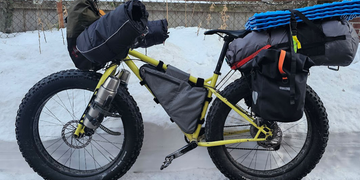
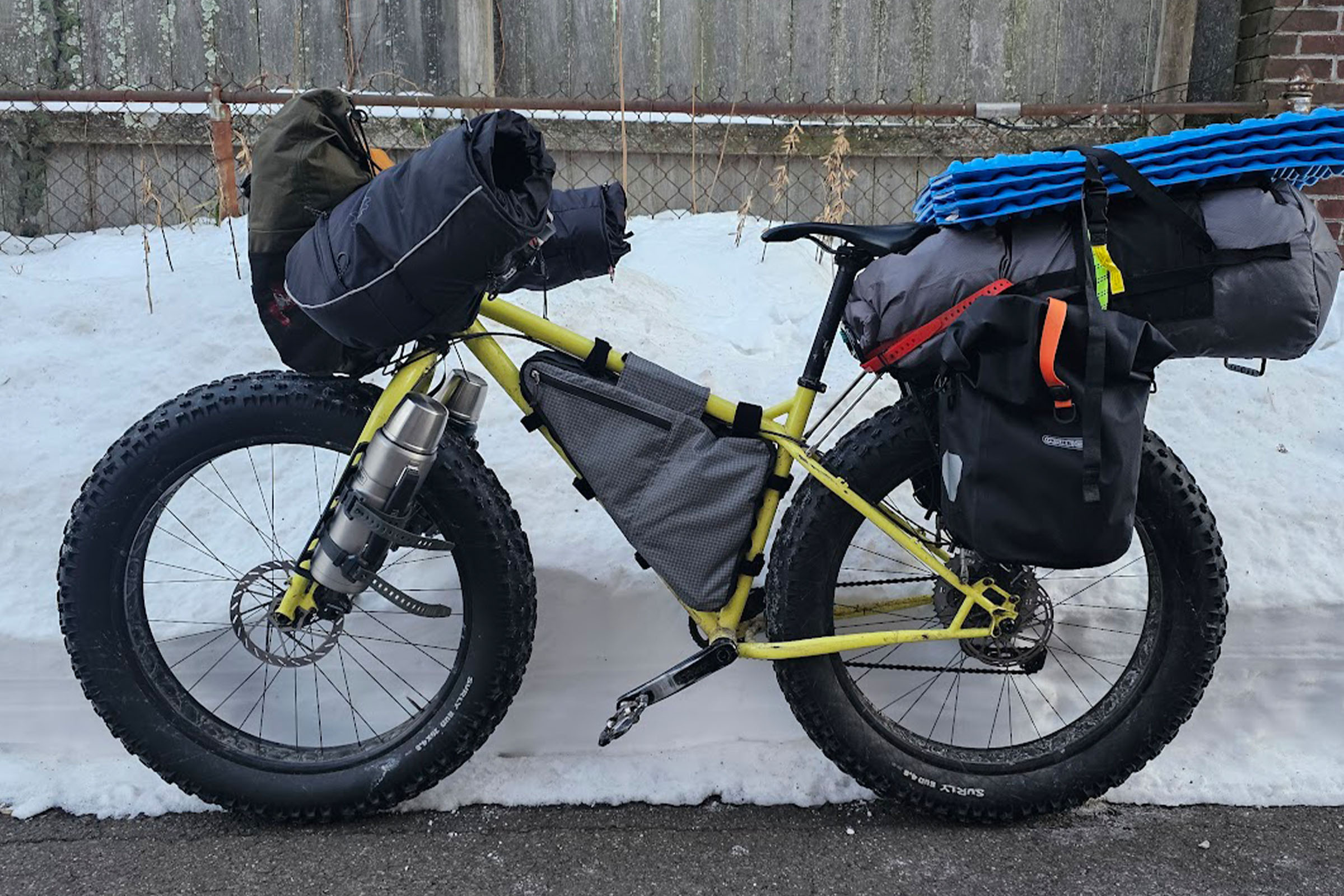
Traditional bikepacking luggage relies on stitched polyurethane-coated nylon or multi-layer TPU laminates, which carry weight penalties, stretch under dynamic trail vibrations, and introduce water-entry risks along needle puncture lines.
[Raw Bio-Based UHMWPE / Dyneema Fiber Weave]
                         │
                         ▼
[Thermo-Bonded TPU / Polymer Film Lamination]
                         │
                         ▼
[Laser-Cut Patterning & High-Frequency Monolithic Welding]
                         │
                         ▼
[Zero-Stitch 100% Submersible, Abrasion-Resistant Ultralight Pack]
- Ultra-High Molecular Weight Polyethylene (UHMWPE): Engineered from bio-based feedstocks, UHMWPE offers a strength-to-weight ratio 15 times greater than steel. This tensile resilience prevents tears and blowouts when bags scrape against granite boulders or overgrown trail singletrack.
- Monolithic High-Frequency Welding: Rather than stitching panels together, manufacturers fuse the composite seams using high-frequency thermal welding. This eliminates all thread holes, rendering frame bags, seat packs, and handlebar rolls 100% waterproof and submersible without internal seam tapes.
- 40% Mass Reduction & Zero Sag: Bags built with bio-composite UHMWPE shed nearly 40% of their tare weight compared to 500D Cordura standards, maintaining structural rigidity and preventing side-wall ballooning between a rider's knees during heavy out-of-the-saddle climbing.
Thermoplastic Carbon Fiber: Toughness, Compliance, and Full Recyclability
In frame design, the bicycle industry's multi-decade reliance on thermoset epoxy resins is giving way to advanced thermoplastic polymers (such as PA, PEKK, or Elium matrices).
| Engineering Metric | Traditional Thermoset Epoxy Carbon | Next-Gen Thermoplastic Carbon Matrix |
| Impact Fracture Resistance | Brittle; prone to catastrophic internal delamination from sharp rock strikes. | 200%+ higher impact toughness; matrix flexes microscopically to absorb and disperse kinetic energy. |
| Vibration Damping | Stiff and resonant; transmits high-frequency trail chatter directly to the rider. | Viscoelastic polymer properties naturally dampen gravel chatter and micro-vibrations. |
| End-of-Life Lifecycle | Non-recyclable; cannot be melted down and ends up in landfill/incineration. | 100% circular & recyclable; can be shredded, remelted, and re-molded into structural components. |
| Manufacturing Speed | Extended autoclave cure cycles requiring manual pre-preg layups. | Automated thermoforming and stamp-curing cycles measured in minutes, eliminating void defects. |
Field Durability & Trail Dynamics
- Down-Tube Armor Redundancy: Because thermoplastic composite gravel and mountain frames absorb sharp impacts without micro-cracking, riders no longer require thick rubber down-tube guards to prevent structural failure from rock strikes thrown off the front tire.
- Modular, Rattle-Free Mounting: Technical pack makers utilize rigid composite internal sub-frames that bolt directly into frame eyelets. Paired with anti-sway carbon seatpost attachments, this eliminates the strap-sway and paint abrasion typical of soft luggage.
- All-Weather Thermal Stability: Bio-UHMWPE laminates maintain dimensional stability and tensile flexibility from sub-zero winter expedition routes ($-30^\circ\text{C}$) to blistering desert heat ($+50^\circ\text{C}$) without delaminating or cracking along fold lines.
The Environmental & Performance Bottom Line
The combination of monolithic Bio-UHMWPE luggage and thermoplastic carbon frames sets a new engineering benchmark for bikepacking and off-road racing. By solving the twin vulnerabilities of gear weight and structural brittleness, this next generation of gear delivers maximum endurance reliability while establishing a clean, circular manufacturing footprint for the outdoors.