







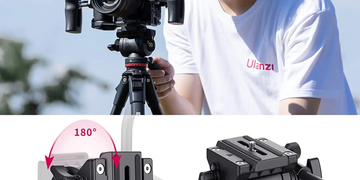







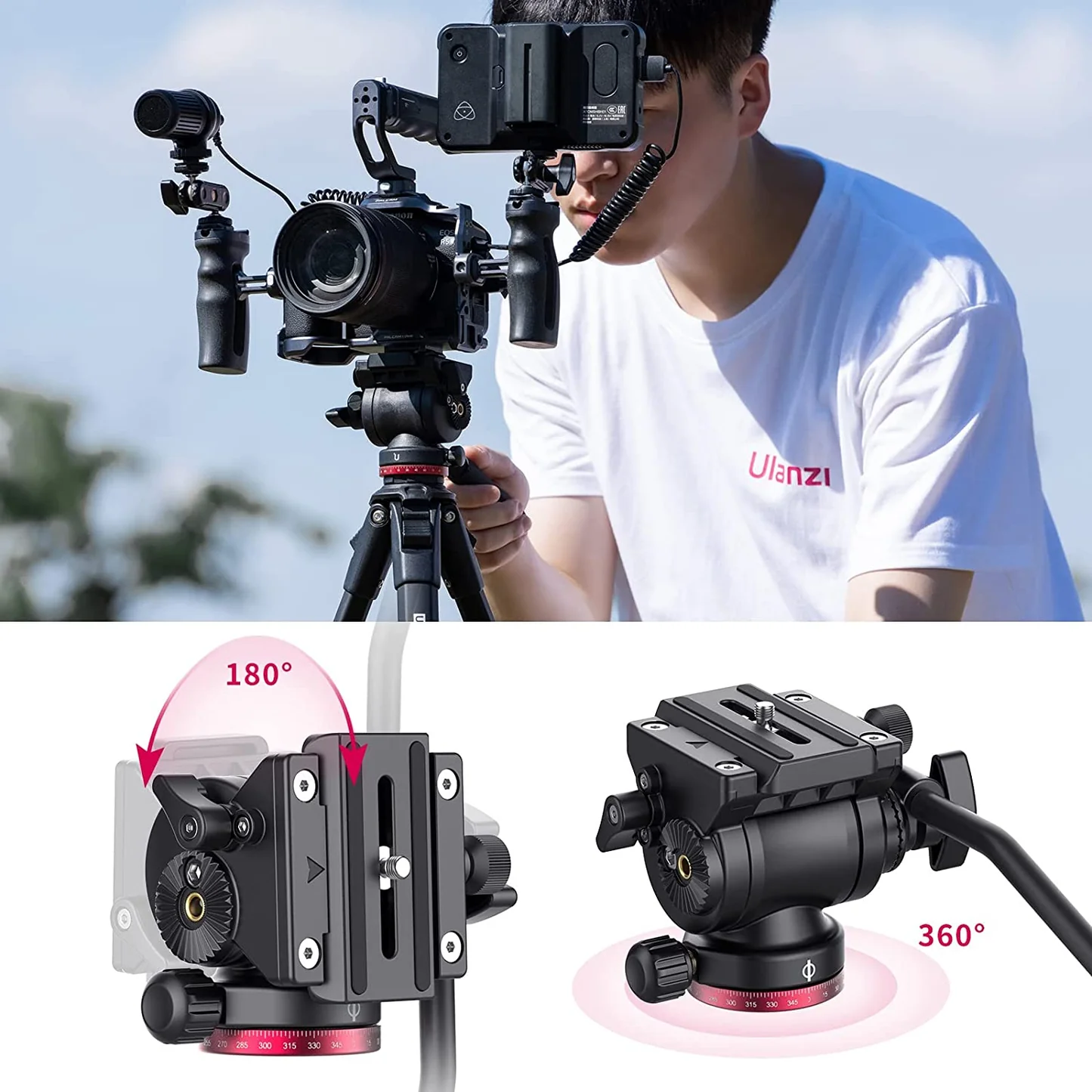
In professional cinematography and broadcasting, camera motion requires zero backlash, zero micro-stutter, and seamless start/stop deceleration. While photo ball-heads rely on raw friction locks, fluid video heads utilize sealed fluid drag cartridges and precision-tuned counterbalance spring systems to suspend heavy cinema payloads at any tilt angle without tipping or drifting.
Paired with rigid dual-stage twin-tube legs and half-ball leveling bases, heavy-duty video tripod systems provide the mechanical foundation for television commercials, live sports broadcast, and narrative filmmaking.
1. Internal Fluid Drag Systems vs. Standard Friction
Low-end video heads rely on dry friction pads (Teflon or plastic discs squeezed against metal), which suffer from stick-slip phenomenon—a high initial static friction that creates a visible jerk when starting or ending a pan/tilt move.
- Hermetically Sealed Fluid Drag Cartridges: High-end heads use interleaved rotor and stator metal vanes immersed in high-viscosity silicone fluid. Resistance is generated entirely by fluid shearing rather than mechanical contact.
- True Fluid Damping Mechanics: Viscous shearing provides completely linear resistance across both pan (360 degrees) and tilt (+90 degrees to -70 degrees) axes. The motion remains smooth regardless of angular acceleration or panning speed.
- Thermal Invariance: Professional fluid formulations maintain stable viscosity across extreme operational temperatures (-40°C to +60°C), preventing the head from seizing in sub-zero environments or loosening under desert heat.
2. Dynamic Stepped Counterbalance Physics
When a built cinema rig (camera, long telephoto/cine-zoom glass, matte box, V-Mount battery, and top monitor) is tilted off-center, gravity exerts an accelerating downward torque proportional to the payload mass, gravity constant, center-of-gravity height, and the sine of the tilt angle.
                  [Tilt Axis Center]
                          |
       +------------------+------------------+
       |                                     |
   [Tilted Forward (+Angle)]         [Tilted Backward (-Angle)]
   Gravity pulls rig down            Gravity pulls rig back
            |                                 |
            v                                 v
   [Internal Counterbalance Spring Compresses and Exerts Opposing Torque]
   -------- Result: Camera floats completely weightless at any angle --------
- Step-Adjustable Spring Modules: Advanced fluid heads (like the Sachtler Aktiv/Ace series) integrate stepped spring systems (typically 1 to 8+ steps). Dialing the step to match the rig's exact weight and center-of-gravity height completely neutralizes gravitational torque.
- Hands-Free Zero Drift (Perfect Dynamic Balance): When balanced correctly, an operator can release their hands from the pan bar at a 45-degree forward tilt, and the camera will remain motionless without locking the tilt brakes.
3. Half-Ball Leveling Bowls: 75mm vs. 100mm Standards
Leveling a tripod on uneven terrain by extending individual leg stages is slow and compromises rig stability. Professional video systems isolate leveling to an integrated spherical half-ball bowl.
| Bowl Standard | Diameter and Interface | Dynamic Payload Capacity | Typical Production Deployment |
| 75mm Half-Ball | 75mm curved spherical bowl | 6 kg to 12 kg (13 to 26.5 lbs) | Mid-tier cinema rigs (Sony FX6, Canon C70, RED Komodo, BMPCC 6K Pro). |
| 100mm Half-Ball | 100mm heavy-duty bowl | 15 kg to 30 kg+ (33 to 66 lbs+) | Full-size broadcast and cinema cameras (ARRI Alexa Mini LF, Sony FX9, heavy studio teleprompter setups). |
| Flat Base with 3/8″-16 | Flat mounting plate | Limited to flat platforms | Direct installation onto camera sliders, dollies, jib cranes, and Hi-Hat floor plates. |
4. Leg Architecture: Twin-Tube Legs and Rapid Deployment Locks
Standard single-tube legs suffer from torsional twist when an operator executes a fast whip-pan. Heavy-duty video tripod legs utilize a Twin-Tube (Dual-Strut) structure to resist rotational deflection.
- Mid-Level vs. Ground Spreaders:
- Ground Spreaders: Deliver maximum structural stability on flat studio floors, preventing heavy cinema loads from splaying the legs outward.
- Mid-Level Spreaders: Mandatory for uneven terrain, outdoor rocks, and staircases where each leg must sit at different elevation planes and spread angles.
- One-Step Rapid Height Clamping: Modern tripod legs (such as SmallRig's FreeBlazer One-Step system or Sachtler Flowtech) replace multiple individual leg clamps with a single top lever that releases both stage sections simultaneously, allowing full deployment in under 3 seconds.
Benchmark Video Tripod Systems and Hardware Comparison
| System Model | Head and Bowl Spec | Counterbalance and Drag | Leg Architecture and Material | Total System Payload |
| Sachtler Aktiv8 / Ace XL System | 75mm SpeedSwap / Sideload Plate | 7 to 15-Step Counterbalance + 3 to 7 Drag Steps | Sachtler Flowtech 75 Carbon Fiber (Single-lever release) | Up to 12 kg (26.5 lbs) |
| SmallRig FreeBlazer Heavy-Duty Kit (AD-01 / AD-100) | 75mm Bowl + Manfrotto/RS2 Quick Plate | Continuous Damping Drag + Preset Spring Balance | Heavy-Duty Twin-Tube Carbon Fiber (One-step lock lever) | Up to 10 kg – 15 kg (22 to 33 lbs) |
| Benro BV8 / BV10 Twin-Tube System | 75mm / 100mm Half-Ball Head | 8-Step Counterbalance + 4-Step Pan/Tilt Drag | Dual-Tandem Aluminum / Carbon Legs with Ground Spreader | 8 kg to 10 kg (17.6 to 22 lbs) |
Essential Best Practices for Operating Fluid Heads
- Find True Mechanical Balance First: Before engaging the fluid drag or adjusting the counterbalance, center your camera rig on the sliding baseplate until it stays level at 0-degree pitch. Only adjust spring settings once mechanical center of gravity is centered over the tilt axis.
- Store with Brakes and Drag Disengaged: When packing down your fluid head into its transport case, always loosen the pan/tilt locks and turn the drag dials to setting “0” (zero resistance) to prevent long-term pressure buildup and seal wear inside the fluid cartridges.
- Match Spreader Type to Floor Surface: Never use spiked feet directly on slick interior surfaces (hardwood, tile, or studio epoxy floors). Always slip on dense rubber foot pads or lock down a ground spreader to prevent leg drift during vigorous panning.