







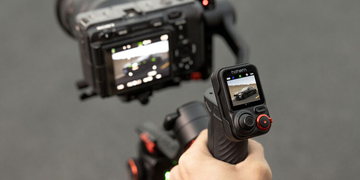
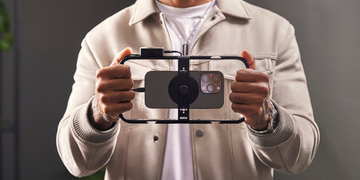
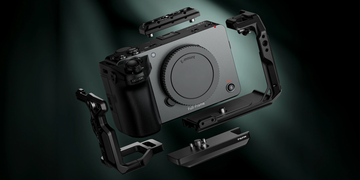










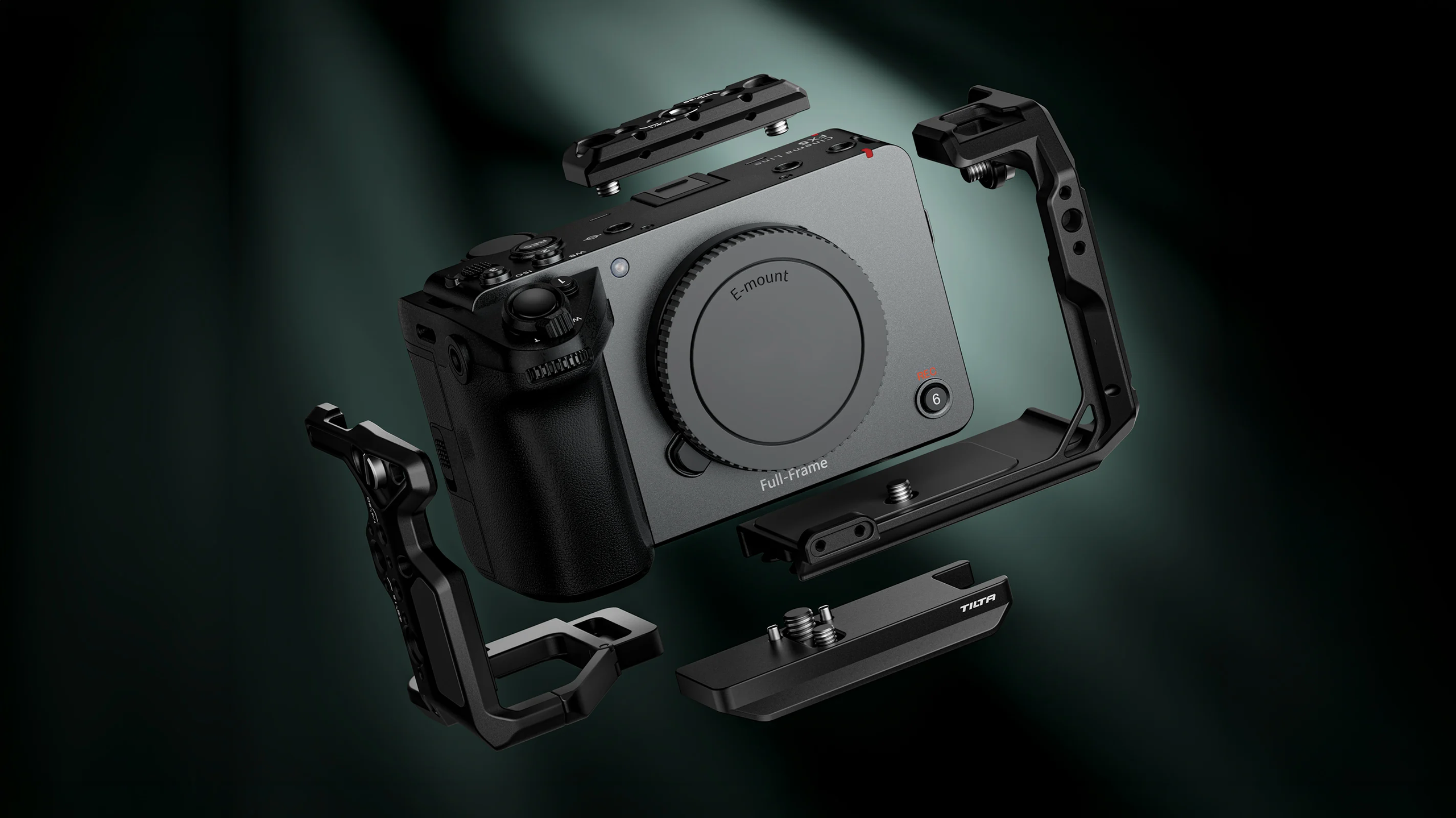
In high-end video and cinema setups, a camera cage serves as a critical structural chassis. Moving beyond cosmetic exterior protection, an engineered cage functions as a load-bearing exoskeleton that absorbs mechanical deflection, dissipates localized sensor heat, protects soldered PCB interfaces, and provides zero-play kinematic mounting points across dynamic axes.
1. Structural Materials, Machining Tolerances & Finite Element Analysis (FEA)
Modern professional cages undergo high-precision 5-axis CNC milling to eliminate mechanical play while maintaining lightweight portability on gimbals and shoulder rigs.
- Aircraft-Grade Alloys (6061-T6 vs. 7075-T6 Aluminum): 6061-T6 alloy provides the industry-standard balance of tensile strength ($310\text{ MPa}$ yield), fracture toughness, and corrosion resistance. Ultra-light cinema cages occasionally use 7075-T6 for increased shear modulus under heavy anamorphic lens loads.
- Torsional Rigidity vs. Body Flex: High-torque wireless follow focus motors (exerting up to $1.2\text{ N}\cdot\text{m}$ to $2.5\text{ N}\cdot\text{m}$ of torque on stiff cinema focus rings) create rotational leverage. An unreinforced chassis will flex, causing micro-shifts in optical alignment (optical axis misalignment relative to the sensor plane). An engineered cage distributes this torsional load evenly across its rigid perimeter.
- Weight Optimization via Skeletonization: Selective ribbing, triangular cutouts, and radiused pocket corners minimize stress concentration points while keeping the cage dry weight between 150g and 260g.
2. Dynamic Locking Vectors & Anti-Deflection Kinematics
Single-point mounting (a standard 1/4″-20 base screw) fails under dynamic panning and vertical acceleration, leading to rotational unthreading and internal thread strip. Professional cages implement multi-axis kinematic constraints.
[Camera Chassis]
       │
       ├─► Base Constraint: 1/4"-20 or 3/8"-16 Thread + Beveled Locator Pins (Z-axis restraint)
       ├─► Lateral Anchor: Left/Right M2.5 / Strap-Eyelet Security Blocks (X/Y-axis anti-twist)
       └─► Front/Rear Friction: Contoured NBR Rubber Pads + Front Raised Anti-Slip Lips
- Three-Point Mechanical Anchoring: Triangulates the camera body using the primary base thread, a secondary base locator pin, and a rigid side block bolted directly to the chassis’s factory strap lug.
- Zero-Play Tolerance: Eliminates mechanical play between the camera's magnesium alloy frame and the aluminum cage, isolating the internal optical image stabilization (IBIS) assembly from external vibration frequencies.
3. Thermal Transfer Pathways & Heat Sinking Performance
Mirrorless systems recording uncompressed 8K RAW, 4K120p, or high-bitrate 10-bit 4:2:2 codecs generate significant heat around the sensor processing unit and dual image processors (e.g., DIGIC Accelerator, BIONZ XR, EXPEED 7), which can trigger thermal throttling and automatic shutdown.
- Conduction & Thermal Bridging: Precision-machined cages leave deliberate contact patches with bottom and rear magnesium alloy chassis sections, using high-conductivity thermal silicone pads ($3.0\text{ to }6.0\text{ W/m}\cdot\text{K}$) to bleed heat away from internal heatsinks.
- Passive Convective Chimney Effect: Strategically positioned venting slots along the bottom and top rails encourage natural air convection across the rear chassis when articulating flip screens are extended.
- Active Cooling Fan Integration: Provides dedicated mounting points and power taps for external peltier/thermoelectric cooling modules over the sensor heat zone.
4. Mounting Standard Interfaces: Mechanical Load & Shear Specs
To eliminate interface failure under heavy payloads, cage architectures standardize specific interface geometries for distinct stress profiles:
| Interface Protocol | Dimensional Spec | Max Static/Dynamic Shear Load | Anti-Rotation Mechanism | Primary Functional Application |
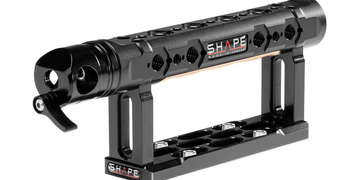
| ARRI Locating Spec | 3/8″-16 UNC + Dual 3mm Retractable Pins | High ($>45\text{ kg}\cdot\text{cm}$ torque) | Dual spring-loaded / fixed steel pins | Top handles, heavy articulating arms, wireless transmitters |
| NATO Rail (Integrated) | Standard 21.2mm Dovetail + Safety Spring Stops | Medium-High | Friction wedge clamp + End safety detent pins | Quick-release slide handles, monitor mounts, run/stop trigger grips |
| 1/4″-20 ARRI Style | 1/4″-20 Thread + 2-Pin Anti-Deflection Holes | Medium | Dual locating holes (9mm spacing) | Compact magic arms, wireless mic receivers, focus motor rods |
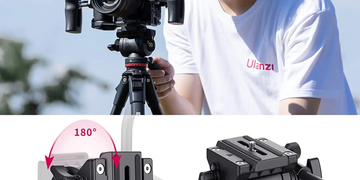
| Integrated Arca-Swiss | 38mm Standard Dovetail (Dovetail Profile) | High Axial Load | Clamping pressure + safety stop screw | Instant drop-in to fluid tripod heads and 3-axis gimbals |
| QD (Quick Detach) | 9.5mm Steel Push-Button Socket | Extreme ($>100\text{ kg}$ tensile) | Internal ball-bearing expansion lock | Heavy-duty shoulder straps and body harness systems |
5. Interface Isolation & Port Strain Relief Engineering
External I/O ports (Full HDMI, Micro HDMI, USB-C 3.2 Gen 2×2, 3.5mm Mic/Headphone, BNC Timecode) are surface-mounted directly to the camera's mainboard. Accidental cable snags create destructive shear forces that crack surface-mount solder joints or tear multi-layer internal PCBs.
[Accidental External Cable Pull]
                 │
                 ▼
       ┌──────────────────┐
       │ Cable Clamp Body │ ◄── Clamps on cable outer sheath (Mechanical Force Dissipated)
       └────────┬─────────┘
                │
                ▼
       ┌──────────────────┐
       │   Cage Chassis   │ ◄── Force transferred to cage frame
       └──────────────────┘
                │
                ✕ (Zero Strain Transferred to Port)
                ▼
       ┌──────────────────┐
       │  Camera Main PCB │ ◄── Port terminal remains completely isolated
       └──────────────────┘
- Dual-Axis Thumbscrew Clamping: Independent mechanical clamping locks the HDMI and USB-C connectors firmly against the cage wall, ensuring zero micro-movement during gimbal pan/tilt maneuvers.
- Cable Strain Isolation: Any impact or tensile force applied to the cable is redirected directly into the cage's rigid aluminum wall, isolating the camera's delicate female port.
- Unrestricted Battery & Media Clearance: Precision-milled clearance geometry guarantees unobstructed access to high-speed CFexpress/SD dual card doors and full battery ejection travel.