

























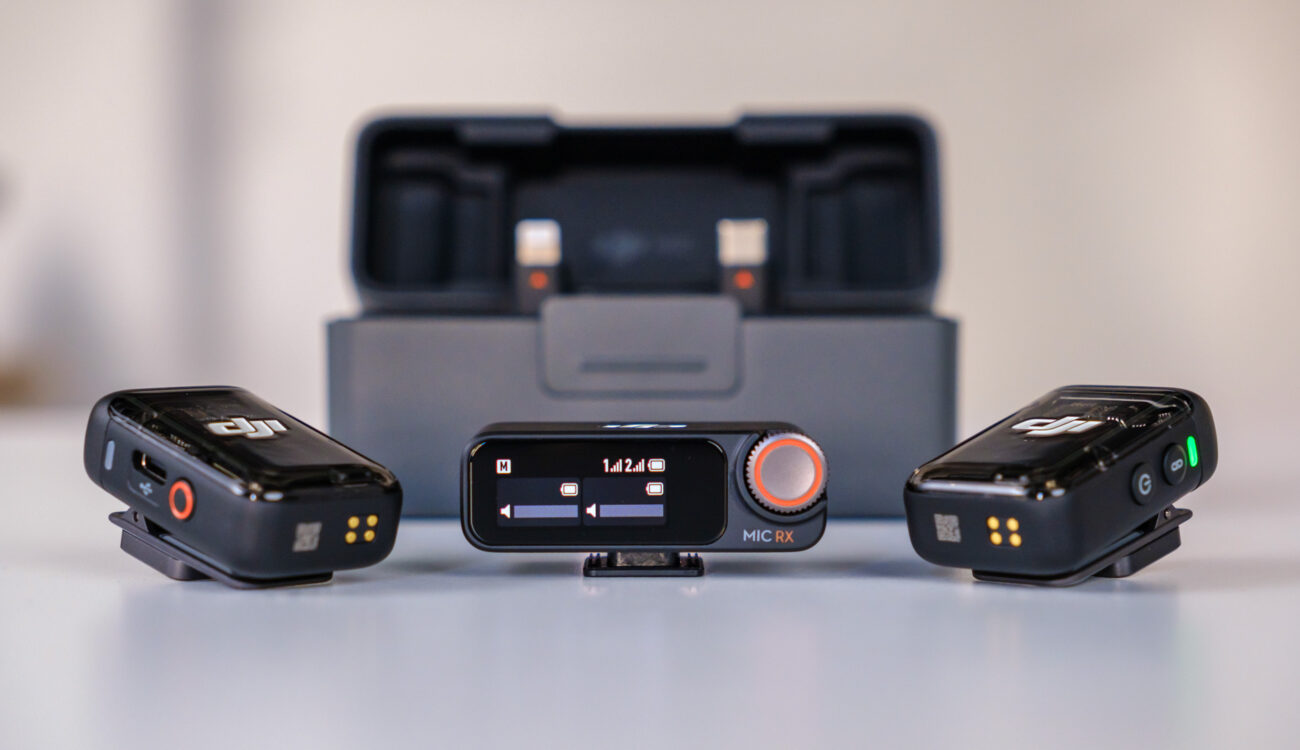
For mobile filmmakers, vloggers, and run-and-gun creators, traditional audio workflows pose constant risks: distorted spikes from sudden loud screams, wireless dropouts in crowded RF zones, and bulky receivers draining camera battery life. DJI revolutionized this space with its intelligent 2.4GHz wireless ecosystem, crowned by the DJI Mic 2.
By integrating un-clippable 32-bit float onboard recording, hardware AI noise cancellation, and direct Bluetooth connectivity, DJI offers a dependable, standalone audio solution for high-mobility production.
Core Technologies & Breakthrough Features
1. 32-Bit Float Internal Onboard Recording
The standout technical advancement of the DJI Mic 2 transmitter (TX) is its standalone 32-bit float internal recording engine backed by 8GB of internal storage (storing up to 14 hours of uncompressed 24-bit/48kHz or 32-bit float audio):
- Infinite Dynamic Range in Post: Standard 24-bit integer recording digitally clips and irreversibly distorts when an audio signal hits $0\text{ dBFS}$. In contrast, 32-bit float uses dual analog-to-digital (A/D) converters with a theoretical dynamic range of up to $1528\text{ dB}$.
- Zero Gain Adjustment Anxiety: Whether your subject whispers or shouts right next to the capsule, the recorded wave file preserves complete waveform integrity. Any clipped peak can be normalized downward in Adobe Premiere, DaVinci Resolve, or Final Cut Pro with zero distortion.
2. Intelligent AI Noise Cancelling
Designed for bustling urban environments, street interviews, and outdoor shooting:
- Dual-Core DSP Filtering: Actively isolates spoken vocal frequencies while suppressing persistent ambient drone, traffic rumble, wind shear, and restaurant chatter.
- Included Deadcat Windscreen: Combined with the transmitter's physical acoustic mesh and clip-on furry windscreen, high-velocity wind noise is dramatically cut at the physical capsule level.
3. Direct Bluetooth & Native Ecosystem Pairing
- Direct Smartphone Connection: Transmitters can connect directly to iOS and Android devices via Bluetooth without plugging in the external receiver (RX), streamlining compact mobile vlogging rigs.
- Direct DJI Camera Integration: Pairs seamlessly with the DJI Osmo Pocket 3 and Osmo Action 4/5 Pro with zero receiver dongles, keeping camera weight and setup profiles ultra-minimal.
Hardware Architecture & Specs
   ┌────────────────────────────────────────┐
   │    All-in-One Metal Charging Case      │
   │  - Auto-Power ON / Instant Auto-Pair   │
   │  - Houses 2x TX, 1x RX, Adapters       │
   │  - Extends Total Operating Time to 18h │
   └───────────────────┬────────────────────┘
                       │
         ┌─────────────┴─────────────┐
         ▼                           ▼
┌──────────────────┐        ┌──────────────────┐
│  Transmitter TX  │        │   Receiver RX    │
│  - 32-bit Float  │        │  - OLED Screen   │
│  - 8GB Storage   │ 350m   │  - Tactile Dial  │
│  - Magnetic Clip │ ◄────► │  - USB-C/Lightning│
│  - 6-Hour Battery│ 2.4GHz │  - 3.5mm TRS Out │
└──────────────────┘        └──────────────────┘
| Specification / Feature | Technical Detail & Practical Metric |
| Transmission Range | Up to 250m – 350m (820 – 1150 ft) line-of-sight (FCC spec) |
| Internal Memory | 8GB per Transmitter (~14 hours of 24-bit or 32-bit float WAV) |
| Battery Life | 6 hours per unit / 18 hours total with metal charging case |
| Polar Pattern | Omnidirectional ($50\text{ Hz} – 20\text{ kHz}$ frequency response) |
| Wireless Protocol | 2.4GHz GFSK & Direct Bluetooth 5.3 Low Energy |
| Physical Attachments | Integrated Spring Clip + Ultra-Strong Neodymium Magnet |
| Outputs | 3.5mm TRS Camera Out, USB-C, Lightning, 3.5mm Headphone Mon |
Best Practices for Field Recording
- Always Enable Backup Onboard Recording: Turn on the transmitter's internal 32-bit float recording every time you hit roll. Even if extreme 2.4GHz RF interference causes a dropout on your camera's main audio track, the transmitter's internal file remains pristine.
- Utilize Magnetic Placement: Instead of clamping the transmitter visibly to the top of a collar, slide the included magnetic backplate under clothing to mount the mic discretely on shirts, jacket lapels, or ties without sagging the fabric.
- Use the 3.5mm Locking Lavalier Port: In formal sit-down interview environments, plug a dedicated $3.5\text{mm}$ lavalier mic into the transmitter's input jack and hide the TX unit in the subject's pocket.